China's AI export draft leaves a route for selling access
Temporary registration begins now, while proposed bans and licensing rules await consultation. The documents distinguish selling a service from transferring technology or control.
A Chinese AI company selling overseas access to its model and one transferring the underlying technology could face different export treatment. That distinction is central to a proposal published on October 16 by China's commerce and science ministries.
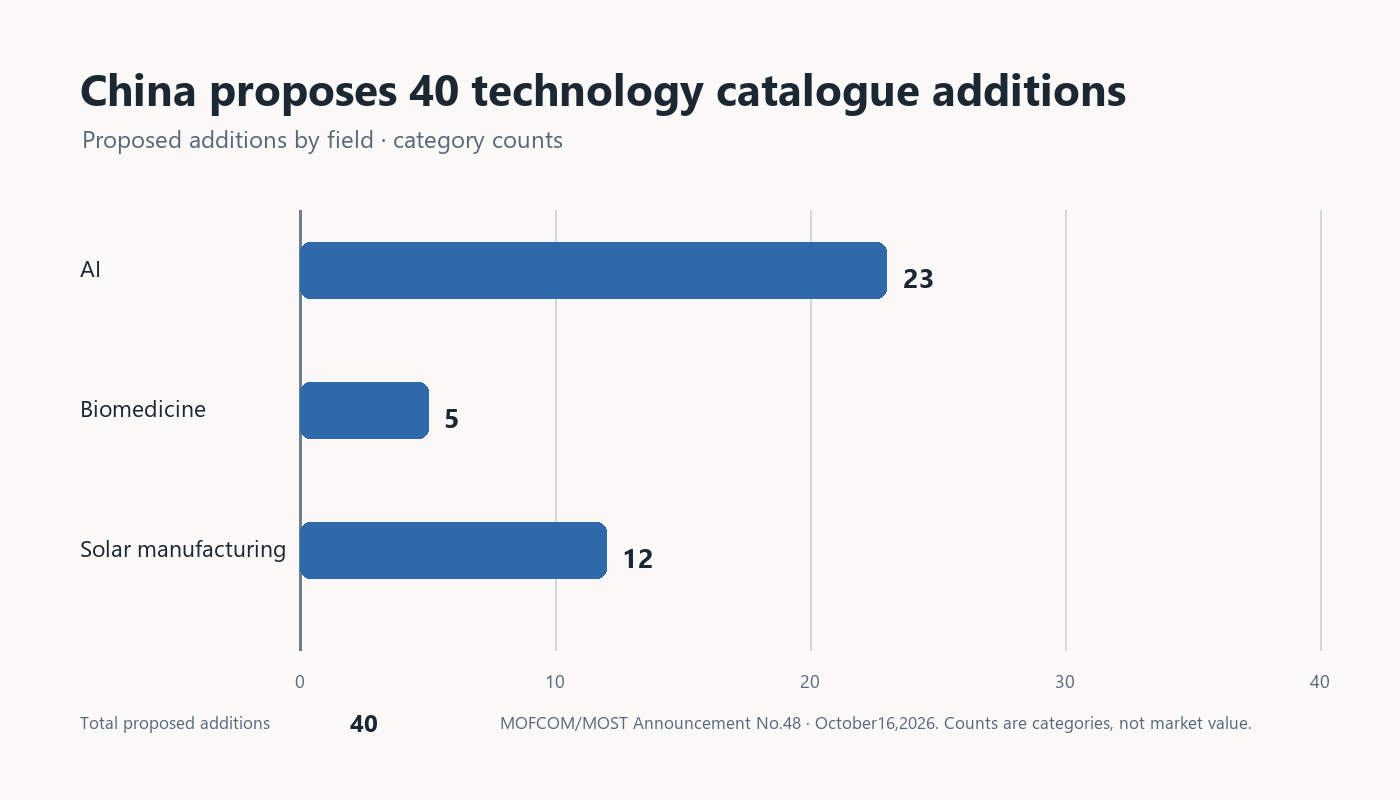
The draft would add 40 technologies to the export catalogue: 23 in AI, five in biomedicine and 12 in solar manufacturing. Separately, exporters must register covered transfers from October 16, including transactions already started but unfinished. Comments close November 15.
Registration starts before the proposed restrictions
The notice covers transfers of technology ownership, overseas licensing and changes that put a domestic technology's owner or actual controller in foreign hands. Registration includes the recipient, destination, intended use and expected transaction value.
Those details make the transaction structure commercially significant. A customer buying an ongoing service and an investor seeking control of technology are buying different things. The registration form asks officials to see that difference, including its proposed price.
The immediate duty is registration. The draft's bans and licence requirements are a separate proposed stage; the notice does not make them final on October 16.
Access is different from transfer
In its accompanying explanation, the commerce ministry says API calls, apps, web interactions and SaaS supplied using restricted models fall outside large-model technology export management. Overseas local deployment of restricted technology would fall within it, with automatic-licensing arrangements envisaged for some cases such as a company's own overseas cloud.
The explanation also identifies lightweight local edge deployment as outside that large-model scope. It therefore does not support a blanket claim that every overseas installation needs a licence. Technology already made public through open source or academic papers is also excluded from the proposal.
The commercial reading is a distinction between earning recurring income from access and transferring control of a reusable asset. That is our analysis of the documents, not evidence of how much revenue the policy will preserve or deter.
What the headline counts cannot tell you
Across all three fields, the draft proposes 14 prohibited and 26 restricted entries. Those totals are not a breakdown of the 23 AI entries. They also measure catalogue categories, not market value or companies affected.
The final scope remains open to consultation. For now, the useful questions are what crosses the border, who controls it and whether the transaction is a service, a licence or a transfer.
For the hardware side of the AI economy, read our analysis of TSMC's profits and cash generation and ASML's manufacturing constraints.
Drafted with AI assistance from the credited sources and source-checked by AI before publication. No human factual review is claimed. Material sources are credited and linked above; quotations are brief and attributed.