Google's 6.3GW power-deal tally mixes three different things
New generation, existing supply and reserve capacity serve different purposes. Adding the headline figures conceals what the agreements actually provide.
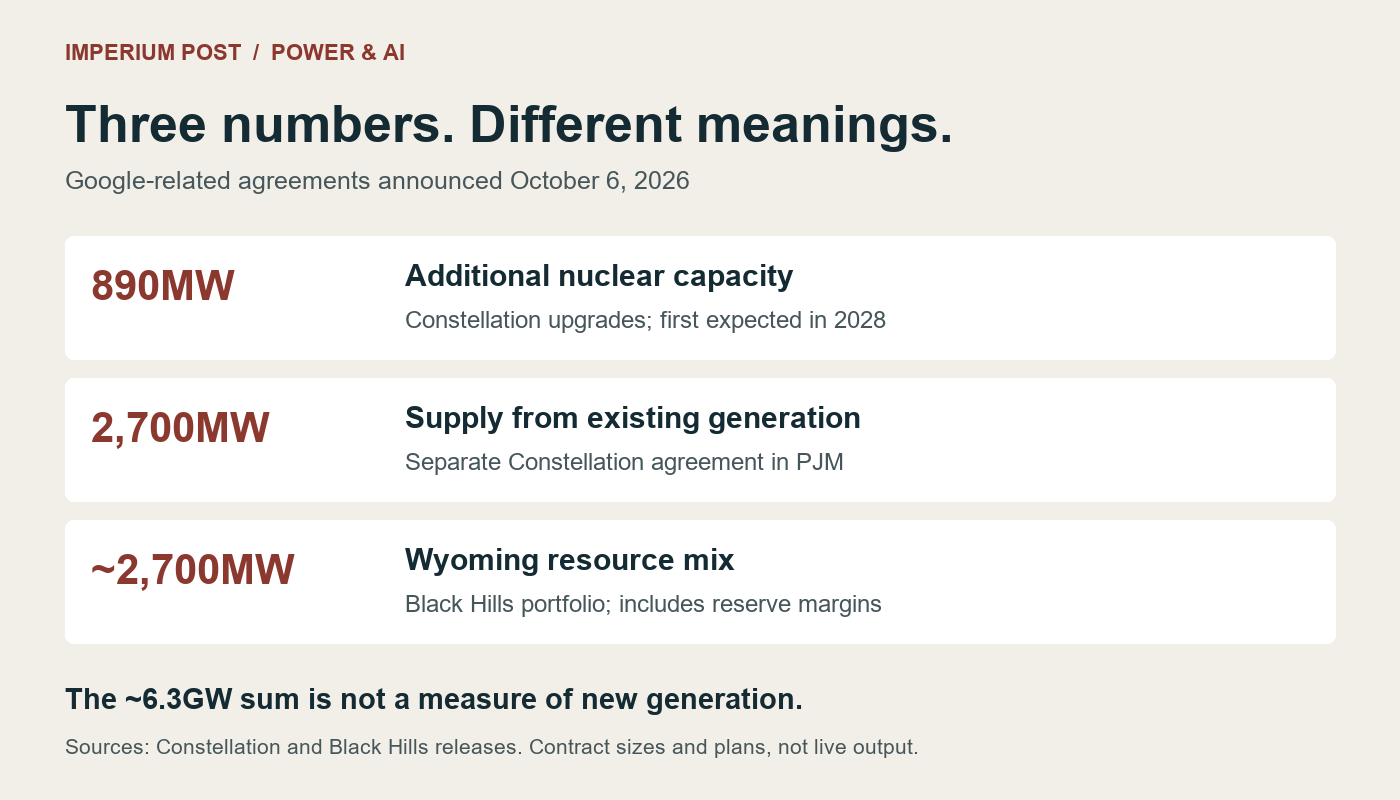
Google's latest power agreements invite a big addition: 890 megawatts plus 2,700 megawatts plus another 2,700 megawatts equals 6,290MW, or about 6.3 gigawatts. But that calculation combines new generating capacity, supply from existing plants and a resource portfolio that includes reserves.
The distinction matters. A contract can secure electricity for a customer without adding the same amount of new generation to the system. Counting every announced megawatt as extra power would overstate what these agreements establish.
Two Constellation agreements do different jobs
In its October 6 announcement, Constellation described a 20-year agreement with Google supporting 890MW of additional nuclear capacity through upgrades to 11 existing units. Constellation plans more than US$4.3 billion of investment, with the first upgrade expected in 2028.
A separate 15-year, 2,700MW agreement covers supply from Constellation's existing operating generation in the PJM region. It provides a long-term customer for that output; it does not describe 2,700MW of new construction.
Wyoming's headline figure includes reserves
Black Hills' October 6 announcement concerns Google's planned Cheyenne data centre. Its roughly 2.7GW resource mix includes reserve margins. Up to 590MW of grid-connected service sits alongside about 2.1GW of third-party resources managed through a private microgrid.
Black Hills plans US$1.8 billion of investment in 564MW of new gas generation during 2027–2029. That 564MW is part of the 590MW service figure, not an extra amount to add. Energy service is planned for late 2027, reaching peak load in 2030.
Read the contract before adding the capacity
The announcements describe several ways of meeting a large customer's needs: expand a plant's output, secure existing supply, or coordinate a portfolio with backup capacity. Those arrangements can all have commercial value, but their headline sizes do not answer the same question.
Nor does dividing a supplier's forecast annual income by its planned construction spending produce a reliable investment return. That shortcut would require matching the income, assets, financing, timing and risks being compared. A simple ratio can conceal more than it explains.
For readers following AI's infrastructure bill, the useful next tests are delivery dates and the separation of newly built capacity from already available supply. These are announced plans and agreements, not evidence that all the power is operating today.
The same discipline applies to finance: our Amazon analysis separates accounting profit from cash flow. Here, separating a supply contract from new generation prevents a large headline total from doing the work of a more useful explanation.
Written and source-checked by Codex, with an editorial review by a second Codex task. Human factual review is not documented for this version. Material sources are credited and linked above; quotations are brief and attributed.